Did Mirabai really drink poison, and who sent it?
The short answer
In her tradition, yes: every early telling has Mirabai drink poison and come to no harm. But those tellings are all devotional, and we found no outside record that confirms it.
Who sent the cup depends on the century of the telling. The oldest, from about 1600, names no one. A copy of 1693 blames a Rana who is her father, a commentary of 1712 says only "the Rana", and the name Vikramaditya, a brother-in-law, belongs to modern retellings.
Who she was, as far as anyone knows
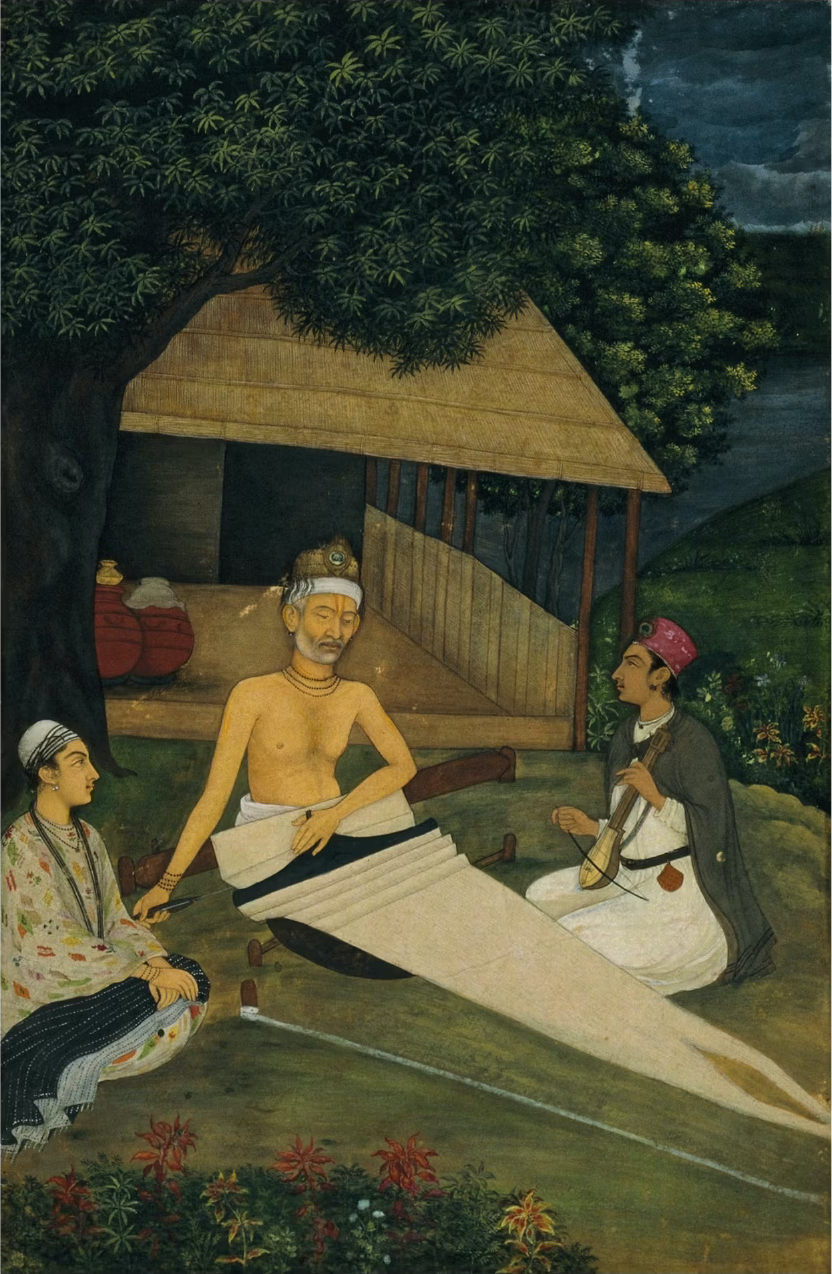
By tradition Mira (Mirabai) was born into the Rathor family of Merta, in Marwar. She is said to have married into the Sisodia family of Mewar, and her husband is usually named as Bhojraj, son of Rana Sanga (the historian John Stratton Hawley, pp. 90–94). Her dates are uncertain: by tradition she was born in 1498, married in 1516 (a year first printed in 1898) and died in 1546 or 1547.
We found little about her in records close to her time. A chronicle of the mid-1600s by Nainsi says only that "they say" she was married to Bhojraj. Family genealogies of the early 1700s list her as a daughter of Ratansimh, married to the Rana of Chittor. Neither mentions poison (Hawley, pp. 90–92).
What the oldest tellings say
The question many people type in Hindi is मीराबाई को जहर किसने दिया, who gave Mirabai poison. The poison, गरल, is already in the oldest telling of her life that we found. The cup, कटोरा or विष का प्याला, appears in the later tellings and in the songs. The tellings, in order:
| When | Telling | Who sends the poison | What happens |
|---|---|---|---|
| About 1600 | Nabhadas, Bhaktamal, chhappay 115 (pp. 120–122) | "The wicked", plural, unnamed | She drinks it as if it were nectar and is unharmed |
| Copy of 1693 | Prem Ambodh, in Punjabi, stanza 27 (p. 117) | A Rana who is her father | She drinks it gladly; then comes a sword; he repents |
| 1712 | Priyadas, commentary on the Bhaktamal, kavittas 474–476 (pp. 120–122) | "The Rana", not named | She raises the cup to her head as an offering and drinks |
| 1762 | Mahipati, Bhaktavijaya, ch. 38 (pp. 73–75) | The king of Udaipur, her father, by the hand of his wife | She offers it to the image and drinks; the image turns green; the king repents |
| About 1919 onward | A Bombay monograph (pp. 69–71), a song book of 1919 to 1920, modern retellings | Vikramaditya (Vikramajit), a brother-in-law | Varies |
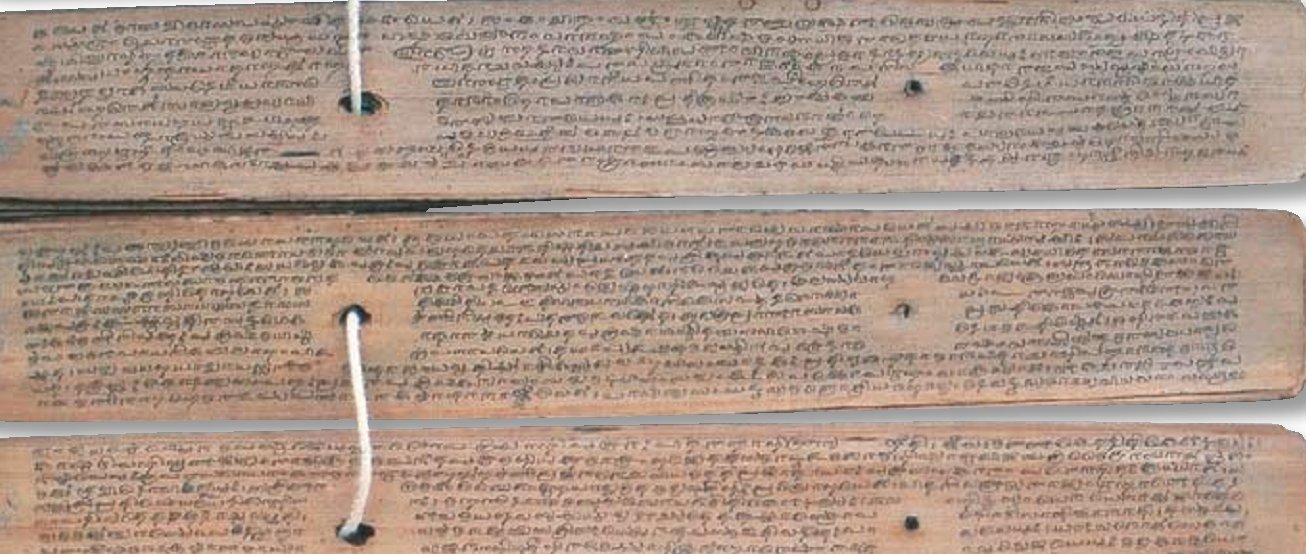
Nabhadas, about 1600. The Bhaktamal is a Hindi verse collection of devotees' lives. His six lines on Mira say that she gave up public shame and the chains of family to worship Giridhar, her Krishna. Then: "दुष्टनि दोष विचारि, मृत्यु को, उद्यम कीयौ। बार न बाँको भयौ, गरल अमृत ज्यों पीयौ॥" In our rendering: the wicked, judging her at fault, tried to kill her; not a hair of her was harmed, and she drank the poison as if it were nectar (Bhaktamal, chhappay 115; the same words in another edition).
There is no Rana in these lines, no name, no relative and no place. The Braj says she drank it like nectar; "turned to nectar" is a translators' phrase.
The Prem Ambodh, copy of 1693. In this Punjabi text the Rana, angry, tries many ways to kill his daughter: "ਪੁਤ੍ਰੀ ਮਾਰਨ ਕਾਰਨੈ ਕਰੈ ਅਨੇਕ ਉਪਾਟਿ". Calling it an offering, he gives her the drink; she drinks it with relish. Later he tells her he no longer sees her as a daughter: she is Hari's servant, and Hari himself (Hari is Krishna): "ਅਬ ਪੁਤ੍ਰੀ ਭਾਉ ਹਮਾਰੈ ਨਾਹੀ" (pp. 117–118). Hawley (pp. 93–94) knew the earliest dated copy as a manuscript of 1783 that says it was copied from one of 1693.
Priyadas, 1712. In his commentary on the Bhaktamal, the Rana flies into a rage and sets his mind on killing her (474). Then "कटोरा भरि, गरल पठाय दियौ": he sent a bowlful of poison, and she drank it (475). Priyadas never says whether this Rana is her husband or her father-in-law. Hawley reads him as probably the father-in-law (pp. 53, 94). In the retelling of Priyadas's commentary, the cup arrives disguised as holy foot-water (charanamrit) offered to her Krishna (Hawley, p. 53). Garcin de Tassy retold it that way in French in 1847 (tome 2, pp. 24–26).
Other early mentions of Mira do not tell the poison story at all (Hawley, pp. 95–98).
What her own songs say
Many songs signed "Mira" speak of the cup. One song, printed in a collection of 1919 to 1920, has the line: "बिष को प्यालो राणा जी मेल्यो". In our rendering: the Rana sent a cup of poison, saying give it to the woman of Merta; she drank it as holy water, singing the praise of Govind (a name of Krishna) (Mirabai ki Shabdavali, p. 14).
Another song in the same book names the Rana's clan and the priest who carried the bowl, as no early telling does: it shows how the story grew, not who sent the cup.
The songs are hard to date. Fewer than 25 poems signed Mira sit in dated manuscripts of the 1600s (Hawley, p. 99). Of those Hawley could print, none mentions poison. The oldest, in a manuscript of 1604, is about longing. One from 1656 to 1657 has a mother-in-law and a sister-in-law watching her (pp. 110–113). A 2023 study argues that even the 1604 poem appears under another poet's name in early manuscripts (Rajpurohit).
The earliest printed poison songs we found are from 1919 to 1920 and 1932 (the 1932 edition as cited by Hawley, pp. 35–36). We found no manuscript date for any of them.
Who was the Rana?
The old texts say "Rana" and give no name. Each candidate came in at a different time:
- Unnamed wicked people: Nabhadas, about 1600.
- Her father: the Prem Ambodh (1693 copy) and Mahipati (1762).
- Her husband or her father-in-law: Priyadas (1712) leaves it open; Garcin de Tassy (1847) read the husband.
- Vikramaditya, a younger brother of Bhojraj: the earliest texts we found that name him are a Bombay monograph of about 1919 and the 1919 to 1920 song book. A. J. Alston, a translator of her songs, traces the name to a report the historian Munshi Devi Prasad said he found in the Mewar archives (Alston, Introduction). Alston himself calls a failed poisoning "commonly accepted as probable", but he rests it on that same unseen report, which a later scholar, Padmavati Shabnam, finds unreliable. We have not seen that report.
Hawley suggests why the brother-in-law entered the story. Once Bhojraj was settled as her husband and remembered kindly, the role of the hard Rana passed to his brother (pp. 134, 141).
Did she survive it, and how did she die?
In every early telling she survives. Priyadas ends her life at Dwarka. Seeing the Rana's clouded mind, she settles there; she goes to take leave of the image of Ranchhor Rai (a name of Krishna), merges into it, "लीन भई", and is not found (kavitta 480). James Tod, writing on Mewar in 1829, tells her last moments in a shrine, the god embracing her; in the passage we read there is no poison (vol. 2, p. 760).
The Bombay monograph of about 1919 has one version where the poison kills her, and another where it becomes a halo at the throat of the Dwarka image (pp. 70–71). English Wikipedia repeats a legend that she vanished into an image after being poisoned by her brother-in-law in 1547.
The usual death year, 1546 or 1547, is argued too. The editor of the 1919 to 1920 song book traced 1546 to a bard's report and rejected it, preferring 1563 to 1573.
What is documented, and what is still open
Documented: the words of the tellings in the table, and their order. The oldest names no one.
Not found: any Mewar chronicle, Mughal source or inscription that mentions the poisoning.
Still open:
- Who first named Vikramaditya, and what the archive report really says.
- Which manuscript first carries a poison song, and its date. The manuscripts of 1638 to 1656 are missing.
- Whether Priyadas's Rana is a husband or a father-in-law, and where he got the story.
- The exact date of Nabhadas, somewhere between about 1585 and 1625.
- Whether any copy of the Prem Ambodh has a second poisoning, as Hawley reports; the pages we read have one cup.
- Whether the foot-water detail belongs to Priyadas's own time, or came with the later prose glosses.
Her life was told in many ways. The oldest accounts agree on the poison and on her survival.
Sources
The old tellings
- Nabhadas, with the commentary of Priyadas (1712), Shri Bhaktamal, ed. Rajendra Das Devacharya, Maluk Peeth, Vrindavan, 2017, chhappay 115 and kavittas 471–480, pp. 120–122
- Nabhadas and Priyadas, Bhaktmal Bhaskar, ed. Ramkumar Das Ramayani, 1968, the same verses
- Prem Ambodh, ed. Davinder Singh Usahan, Punjabi University, Patiala, 1989, Mira's chapter pp. 108–119, stanzas 27–32 on pp. 117–118
- Mahipati, Bhaktavijaya (1762), ch. 38, in Abbott and Godbole, Stories of Indian Saints, vol. 2, Poona, 1933, pp. 73–75
Later retellings
- James Tod, Annals and Antiquities of Rajast'han, vol. 2, London, 1829, p. 760
- Garcin de Tassy, Histoire de la littérature hindouie et hindoustanie, tome 2, Paris, 1847, pp. 21–26
- Mirabai ki Shabdavali, Belvedere Printing Works, 9th edition, 1919 to 1920, p. 14
- S. S. Mehta, Monograph on Mirabai, the Saint of Mewad, Bombay, about 1919, pp. 69–71
Studies
- Hawley, Three Bhakti Voices: Mirabai, Surdas, and Kabir in Their Time and Ours, Oxford University Press, New Delhi, 2005, pp. 34–36, 53, 90–113, 128–141
- A. J. Alston, The Devotional Poems of Mirabai, Delhi, 1980, Introduction
- Rajpurohit, "Mīrā's 'Earliest' Song and Her Images in History and Hagiography", 2023 (abstract)
- Chaturvedi, Mirabai ki Padavali, 1932, as cited by Hawley, pp. 35–36
Where the claim is repeated
This article is human-led: people on our team picked the topic, set the direction and approved every word. AI helped us research, draft and check.